

December 2nd, 2025
Edibles feel stronger and last longer than smoking because your liver converts swallowed THC into 11-hydroxy-THC, a metabolite that crosses the blood-brain barrier more efficiently than regular Delta-9 THC.
This liver metabolism process, called first-pass metabolism, explains why a 10mg gummy can completely overwhelm someone who comfortably smokes an entire joint.
When you smoke or vape cannabis, THC travels from your lungs directly into your bloodstream and reaches your brain within minutes, peaking around 30 minutes and fading within 4 to 6 hours.
Understanding this biological difference transforms edibles from unpredictable mystery into a knowable system you can navigate with confidence.
Explore our bestsellers

Pluto
From $17.00

15mg Delta 9 THC Gummies
From $19.00

Sleep Gummies
From $29.00

Rapid Onset Delta 9 THC Gummies
From $29.00

Kush Mintz
From $16.00

Wonder Bread
From $16.00

THCa Moonrocks
From $10.64/g

50mg Delta 8 Gummies
From $39.00
Table of Contents
Why Edibles Feel Stronger Than Smoking
The Timeline You Can Actually Use
Start With the Right THC Amount
The Waiting Game Explained
Why the Same Gummy Hits Different on Different Days
Not All Edibles Are Equal
Read the Label Like a Pro
If You Took Too Much
Edibles vs Smoking in Practice
Making Edibles Work for You
Why Edibles Feel Stronger Than Smoking
Your liver transforms regular Delta-9 THC into 11-hydroxy-THC when you eat cannabis, creating a compound that's approximately two to three times more psychoactive and crosses the blood-brain barrier more efficiently.
Smoking sends THC straight from your lungs to your bloodstream to your brain in minutes, while edibles take the scenic route through your digestive system, where your liver manufactures this more potent compound.
This is why years of smoking experience become almost worthless when facing your first edible — your tolerance is built for Delta-9 THC delivered through your lungs, not for 11-hydroxy-THC created by your liver.
Explore our categories




The Timeline You Can Actually Use
Every edible experience runs on two separate clocks: the stomach clock determines when effects start (30 to 120 minutes), and the liver clock controls intensity as your liver converts THC into 11-hydroxy-THC.
Peak effects occur around hours 3 to 4, when the 11-hydroxy-THC concentration reaches its maximum, with the total experience lasting 6 to 12 hours and possible residual effects the next morning.
Smoking delivers effects within 5 to 10 minutes, peaks around 30 minutes, and fades within 4 to 6 hours.
This extended timeline creates the classic mistake: you take a gummy at 7 pm, feel nothing by 7:45 pm, take another, and both hit together around 9 pm with double the intended intensity.
Start With the Right THC Amount
The cannabis community has learned through countless uncomfortable experiences that 2.5 to 5mg is the actual safe starting point for edibles, despite many products listing 10mg as a "standard" serving.
A 10mg edible represents a standard recreational amount in most legal states.
Still, it's often too much for first-timers because that's 10mg going through liver conversion into the more potent 11-hydroxy-THC.
For reference across the potency spectrum: microdosing sits at 1 to 5mg for subtle effects, 10mg is standard recreational, 20 to 30mg is a strong amount for experienced users, and anything above 30mg enters hero territory where only regular consumers with established tolerance should venture.
Products containing 100mg or more are available for individuals with a very high tolerance, but these represent the upper end of the range.
Here's the critical nuance most people miss: smoking tolerance and edible tolerance are separate systems.
Your body builds tolerance to Delta-9 THC delivered through your lungs and tolerance to 11-hydroxy-THC created by your liver as two different processes, which explains why daily smokers can still be floored by their first edible.
Mood offers options across this entire spectrum, from their Micro-Dose Delta-9 THC Gummies, containing 5mg of Delta-9 THC combined with 25mg of CBD, for newcomers.
Their 30mg Delta-9 THC gummies are designed for experienced users seeking powerful effects.
Whatever THC amount you choose, the universal rule remains the same: wait at least two hours before considering more.
The Waiting Game Explained
Your stomach and liver both operate on their own biological timelines that don't respond to impatience or wishful thinking.
The stomach clock varies by an hour or more depending on recent food intake and individual metabolism, while the liver clock converts THC at its own pace based on enzyme levels.
Taking more before the first serving kicks in stacks the servings — if you take 10mg at 7 pm and another 10mg at 7:45 pm, you're getting 20mg converted to that more potent form when both hit around 9 pm.
Once you eat that gummy, there's no taking it back — the experience will unfold on biology's schedule, not yours.
Why the Same Gummy Hits Different on Different Days
The same gummy from the same jar can feel wildly different because your liver enzyme activity fluctuates based on health, medications, sleep quality, and your overall daily state.
A gummy taken on an empty stomach absorbs faster and hits harder than the same amount taken after a heavy meal, even though fatty foods help THC absorption by slowing the process and stretching effects over a longer curve.
Your mental and physical state matters — the same 10mg that feels manageable when you're well-rested can feel overwhelming when you're exhausted.
Some people are "fast metabolizers" whose livers quickly create high concentrations of 11-hydroxy-THC from small amounts, while "slow metabolizers" need larger amounts for comparable effects.
Not All Edibles Are Equal
The delivery format significantly alters both onset speed and experience:
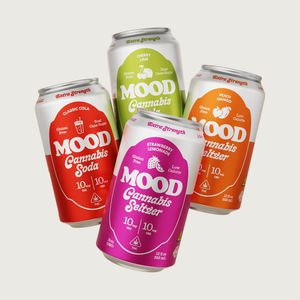
Beverages with nanoemulsification (15 to 30 minutes)
Standard gummies (30 to 120 minutes)
Sublingual products are held in the mouth (which partially bypasses digestion)
Dense baked goods (which have the slowest absorption)
Nanoemulsification breaks THC into microscopic droplets that increase bioavailability from 6-20% to around 85%, meaning more THC reaches your system faster.
Mood's Hero Dose Rapid Onset THC Gummies use this technology for effects within 5 to 15 minutes, creating a quicker peak within 30 to 60 minutes.
The honest truth: rapid-onset speeds absorption, but some THC still converts to 11-hydroxy-THC through your liver, just on a faster timeline.
These products tend to feel clearer, peak earlier, and fade within 2 to 4 hours rather than 6 to 12, helping prevent the "took more too soon" mistake through faster feedback.
Read the Label Like a Pro
Understanding labels starts with distinguishing between per-serving and per-package amounts. A package with "10mg per gummy" and 10 pieces contains 100mg total; therefore, three gummies contain 30mg.
Check for additional cannabinoids beyond THC: CBD can mellow intensity, CBN supports rest, and CBG appears in focus formulations.
The Certificate of Analysis (COA) from third-party testing confirms the exact composition of the product, including its potency and any potential contaminants.
Mood's batch-level COA testing ensures that 15mg actually means 15mg, not 12mg or 20mg, which matters when controlling your experience.
Hemp-derived products must contain less than 0.3% Delta-9 THC by dry weight to be federally compliant — a 4-gram gummy can legally hold 10mg while meeting this standard.
Always verify accessible COAs and that the cannabinoid profile matches the label without surprise additions.
If You Took Too Much
If you're reading this section because you're currently experiencing effects that feel too strong, here's the most important thing to know: this will pass with time, and you're going to be fine.
Find a comfortable, safe space where you can relax without distractions or demands, ideally somewhere you feel secure and can stay for several hours.
Stay hydrated with water or juice, and focus on slow, controlled breathing — inhale for four counts, hold for four, exhale for four, and repeat until you feel steadier.
The effects will gradually decrease over the next 4 to 8 hours as the 11-hydroxy-THC levels in your blood naturally decline, though you might notice residual feelings for longer.
Important Disclaimer: Mood is not a health or medical authority, and the information provided is not intended as medical advice. If you experience concerning symptoms or feel that you need professional help, consult with licensed healthcare professionals who can provide proper medical guidance for your situation.
Uncomfortable experiences with edibles are temporary and typically resolve on their own as your body processes the cannabinoids.
However, knowing when to seek help is part of being responsible with any substance.
The lesson for next time: start with a lower THC amount, wait the full two hours before considering more, and plan your timing around when you can afford a long session.
Edibles vs Smoking in Practice
These two consumption methods deliver fundamentally different experiences, each with its place, depending on what you're trying to accomplish.
A joint provides immediate feedback within minutes, letting you feel the effects in real-time and stop when you've reached your desired level.
However, the experience fades within 4 to 6 hours, and you're left to manage the effects of smoke inhalation.
A 10mg edible builds up more slowly over the 30 to 120 minute onset period.
It tends to feel stronger at peak than what you might experience from smoking because of that liver conversion to 11-hydroxy-THC, and delivers an extended experience lasting 6 to 12 hours.
The practical advantages of edibles include no smoke inhalation, complete discretion (nobody knows you ate a gummy), and an extended duration that works well for situations where you want sustained effects.
The downsides show up in the delayed onset that makes controlling your experience harder because you're committing to a THC amount hours before knowing how it feels.
That same long duration becomes a problem if you accidentally take too much.
Both methods process through your body differently at the chemical level: smoking delivers Delta-9 THC straight to your brain.
At the same time, edibles convert THC into 11-hydroxy-THC through your liver, which explains why they can't be directly compared using simple equivalencies like "10mg equals half a joint."
It's worth noting that both methods can interact with medications that are metabolized by the liver, so anyone taking prescription drugs should consult with their healthcare provider about potential interactions.
The right choice depends on your priorities.
If you want immediate control and a shorter duration, then smoking or vaping offers better real-time feedback.
At the same time, edibles work better when you wish for longer-lasting effects and can commit to a specific THC amount in advance.
Making Edibles Work for You
Edibles stop being mysterious the moment you understand the route THC takes through your body and respect the two clocks that run every session.
Your liver converts eaten THC into a more potent form called 11-hydroxy-THC through first-pass metabolism, which is why the same amount hits harder and lasts longer than when you smoke.
The stomach clock (onset timing) and liver clock (intensity building) both run on biology's schedule, not yours, which means patience isn't optional — it's how you avoid accidentally doubling your intended THC amount.
Match your THC amount to your experience level and goals:
Start with 2.5 to 5mg if you're new or cautious
Consider rapid-onset options if faster feedback helps you feel more in control
Plan for higher amounts only when you've established your tolerance and can commit to a longer session
Reading labels carefully, verifying third-party COAs, and planning your timing around your schedule transforms edibles from unpredictable wildcards into reliable tools for extended relaxation.
Mood's product range spans from 5mg microdose options, combined with CBD for gentle experiences, to 30mg gummies for seasoned users, with rapid-onset formulations available for those who prefer quicker feedback.
The transparency of batch-level testing and accessible COAs means you know exactly what you're taking, removing the guesswork that makes edibles feel unpredictable.
Your liver will keep converting THC into that more potent 11-hydroxy-THC form as long as you choose to eat cannabis.
The trick is understanding this process well enough to make it work for your goals rather than against them.