


Written by Sipho Sam
January 29th, 2026
You twist a joint, and it looks finished, but when you light it, the draw feels like sucking through a blocked straw, or it burns lopsided down one side.
The problem is not the twist itself.
Grind consistency, flower moisture, and pack density decide whether a joint pulls well.
Lighting technique seals the deal or sabotages everything upstream.
This guide shows how to close the tip without choking airflow, plus the fixes that actually prevent tight draws and uneven burns.
Explore our bestsellers

Pluto
From $17.00

15mg Delta 9 THC Gummies
From $19.00

Sleep Gummies
From $29.00

Rapid Onset Delta 9 THC Gummies
From $29.00

Kush Mintz
From $16.00

Wonder Bread
From $16.00

THCa Moonrocks
From $10.64/g

50mg Delta 8 Gummies
From $39.00
Table of Contents:
- How to Twist a Joint Without Blocking Airflow
- The Tuck That Makes the Finish Work
- Feel What Good Density Is Before You Light
- Grind and Moisture Set the Draw Before You Roll
- Light It So the Draw Stays
- Open Papers and Filters That Support Airflow
- Quick Fixes for Tight Draws and Uneven Burns
- How to Finish Pre-Rolled Cones the Right Way
- When You'd Rather Not Practice
- What Good Feels Like
How to Twist a Joint Without Blocking Airflow
The twist is a closure method in which you pinch the excess paper above the flower and rotate until it seals.
Pinch the paper between your thumb and forefinger just above where the flower ends, then rotate in one direction until the paper forms a seal.
Stop before you create a hard, tight spike that plugs the tip.
The Dutch Crown is an alternative finish that folds excess paper flat rather than twisting it into a point.
Tamp your flower down to leave 5 to 8 mm of empty paper at the top.
Fold one edge of the paper inward toward the center, then fold the adjacent edge over it, continuing around the circle.
Once all edges overlap in the center, give a light twist to lock the folds in place.
Twist is faster; Dutch Crown lights more evenly and resists canoeing.
The flat surface of a Dutch Crown distributes ignition heat across the full width of the joint, while a twisted tip acts like a fuse that burns down through the narrow point.
If you are after speed, twist works.
If you want a cleaner ignition and more predictable burn from the first puff, the Crown delivers.
Explore Pre-rolls
Kush Mintz
From $16.00

Peace Potion
From $16.00

Georgia Pie
From $16.00

Gary’s Cherries
From $16.00

Smoker Summer Bundle
From $74.00
$92.00

Sour Face
From $16.00

Wedding Cake
From $16.00

Top Gun
From $16.00
The Tuck That Makes the Finish Work
The tuck is the hardest step for beginners.
Roll the paper like a pencil between your fingers while applying slight downward pressure until the unglued edge slips under the flower.
This motion creates the seam that holds everything together.
Without a clean tuck, the paper will not stay where you put it.
Get the tuck right, and the finish becomes a formality.
Feel What Good Density Is Before You Light
Aim for a firm with slight give.
Too-tight restrictions restrict airflow and make drawing difficult.
Too loose burns unevenly and wastes flower.
The ideal joint feels firm, with slight give when gently squeezed, like a fresh cigarette.
Run a pinch test along the full length of the joint before you close the tip.
Squeeze gently between thumb and forefinger from the filter end to the opening.
Tight spots will feel rock-hard and resist compression.
Loose spots will collapse easily.
If you find a loose section, tamp it down toward the filter with the back end of a pen or a packing tool.
Gravity and a few light taps settle the flower into tighter formation.
If you hit a tight spot, roll that section gently between your fingers to redistribute the flower and break up any clumps.
For a joint that still feels tight after adjustments, insert a thin skewer or toothpick straight down the center before closing the tip.
Twist it slightly as you remove it to create a smoke channel that gives air a path through dense packing.

Grind and Moisture Set the Draw Before You Roll
Medium grind is the target.
Achieve it with 2 to 3 rotations in a sharp grinder.
Overly fine powder compacts when you roll and clogs the draw, no matter how you finish the tip.
Chunky pieces create uneven air pockets that channel smoke down one side, leading to runs and canoes.
You can see the difference.
Fine grind looks like dust and feels powdery between your fingers.
Medium grind has visible texture, with pieces small enough to pack evenly but large enough to maintain structure.
Chunky grind still shows recognizable bits of flower.
Moisture plays a bigger role than most guides admit.
Properly cured flower rolls easily and burns evenly without special handling.
Too dry crumbles into powder, burns hot and fast, and often gets mistaken for a grind problem.
Too moist will not stay lit and requires constant relighting.
People blame the twist when the real issue is flower that should have sat out for an hour before rolling.
Light It So the Draw Stays Open
Hold the joint between your fingers, not your lips.
Light your flame away from the joint, then bring it to the tip.
Slowly rotate while applying flame until the tip is fully cherried.
Inhale only after an even cherry forms.
This sequence prevents the uneven ignition that masquerades as an airflow problem.
Lighting with the joint in your mouth pulls flame and heat directly into the paper before the flower is ready.
Holding it in your fingers while you apply heat lets you see what is happening and control the rotation.
Keep the flame just off the paper rather than touching it directly.
You are heating the flower to ignition, not torching the paper.
When one side burns faster than the other, this is called canoeing, and you can fix it mid-session.
Lightly moisten the fast-burning side with saliva on your fingertip to slow it down, or apply more heat to the slower side while continuing to rotate.
Most canoes trace back to uneven packing or rushed lighting.
If you are getting them consistently, the problem happened before the twist, not because of it.
Papers and Filters That Support Airflow
Rice papers burn slowly and clean, but are thin and tricky to work with if you are learning.
Hemp papers balance durability and taste.
Wood pulp papers are the easiest to roll because they are thicker and more forgiving, but they burn faster and leave more ash.
The real win is filter sizing.
Too small narrows the channel and packs the flower too tight at the mouthpiece end.
Too big distorts the roll.
Properly sized filters are why quality pre-rolls feel consistent.
Quick Fixes for Tight Draws and Uneven Burns
Here are the most common problems and their fixes:
- Tight draw after twisting: This usually means an overpacked flower or a too-fine grind. Run your fingers along the body to find dense spots and roll them gently to redistribute. If the whole joint feels tight, create a smoke channel with a thin skewer before your next session.
- Canoeing (one side burns faster): Uneven packing or rushed lighting. Tap the flower down toward the filter to even out the distribution. When lighting, take your time rotating to build an even cherry. Mid-session, moisten the fast side or heat the slow side while rotating.
- Will not stay lit: Flower is too moist, or ignition was too weak. Let the moist flower sit out for 30 minutes before rolling. When lighting, make sure you build a full cherry across the entire tip before taking your first pull.
- Harsh smoke: Flower is too dry or ground too fine. Properly cured flower smokes smoothly. If your stash is dry, there is not much you can do mid-session except take slower, gentler pulls.
- Paper tearing: Too much saliva on the seal or rough handling during the tuck. Use just enough moisture to activate the gum, and handle the paper with light pressure when you are tucking and rolling.
Different flower and different papers mean small adjustments every time.
These are not failures but normal refinements that come with the territory.
How to Finish Pre-Rolled Cones the Right Way
Pre-rolled cones eliminate the tuck by giving you a pre-formed shape.
Fill them in layers rather than dumping all your flower in at once.
Add a layer, tamp it down with a straw or pen, add another layer, and tamp again.
Once you have filled to the top, close with either the twist or the Dutch Crown using the same techniques already covered.
Cones handle the hardest step, the tuck, while preserving your control over flower selection and density.
When You Would Rather Not Practice
Some people decide the craft is not worth the time investment, and that is a reasonable call.
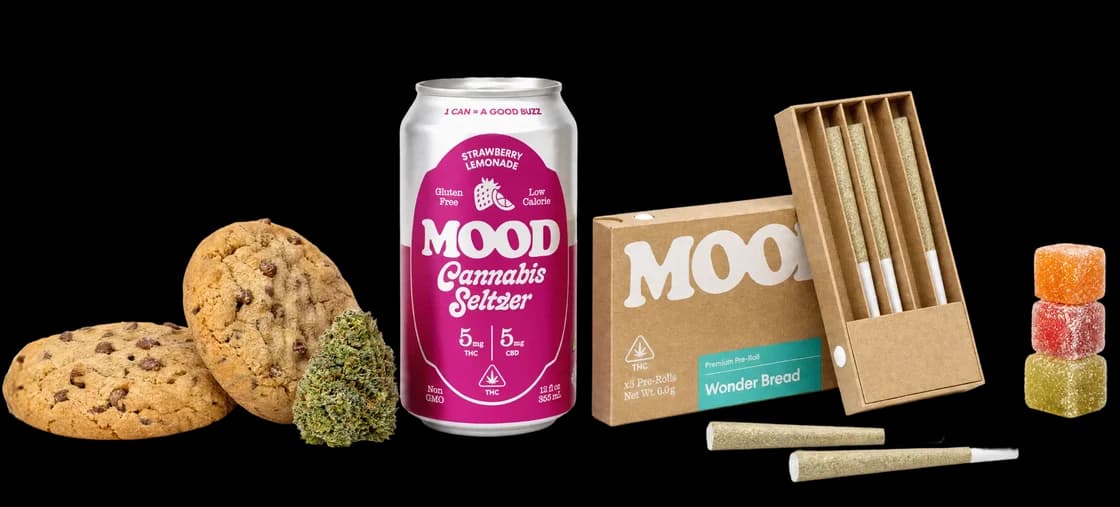
Mood's Wonder Bread pre-roll is a one-gram, lab-tested THCa joint with the construction details that make drawing predictable.
Properly sized filters, consistent packing from end to end, and fresh ground flower that becomes more potent when smoked deliver a balanced hybrid experience for focused sessions.
It solves the time and skill problem without asking you to master a technique.
Pre-rolls give you a consistent option while you practice, or they can become your permanent solution if rolling isn't your thing.
Either way works.
Mood offers millions of users hemp-derived THC, which is 100% legal and fully compliant cannabis.
You may have heard that the legality of hemp-derived THC is currently under attack, which could threaten the wellness of so many.
Read here to learn how to join the fight, and help us keep hemp cannabis accessible to all for a long time to come.
What Good Feels Like
A clean tuck makes the seam cooperate.
The finish you choose protects airflow rather than choking it.
The right density, a medium grind, and proper moisture set the draw before you ever light.
An even cherry ties it all together.
Whether you roll, pack a cone, or reach for a pre-roll, you now know how to get an even burn and a smooth pull.